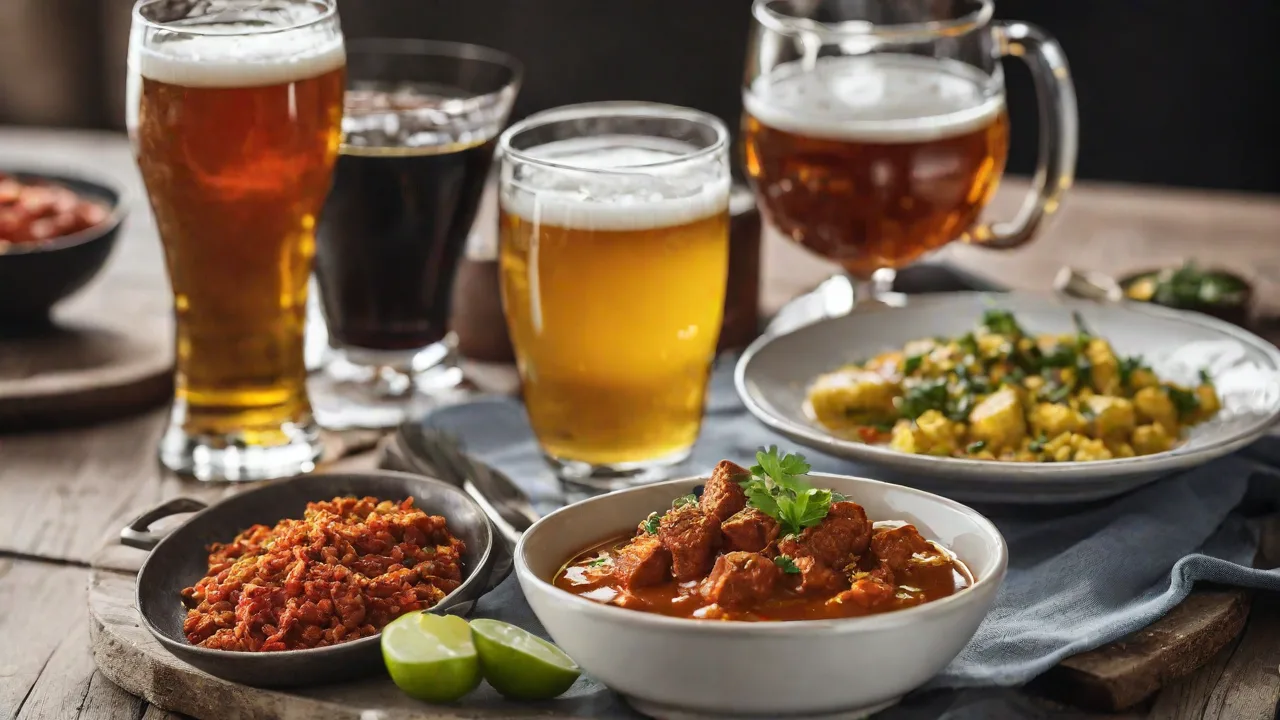
German Beer Pairings for Spicy German Curry and Fusion Dishes
Introduction: The Spiced Frontier of the Modern German Palate
While traditional German cuisine is celebrated for its mild, herb-forward, and savory flavors, the culinary landscape of modern Germany has been transformed by global influences and multicultural fusion. Today, street food and home kitchens across the country feature dishes that embrace bold, spicy, and aromatic seasonings. From the iconic Currywurst born in the ruins of post-war Berlin to the ubiquitous Turkish-influenced Döner Kebab and modern German-Asian fusion concepts, spice has become an integral part of the national diet. These dishes combine the rich, savory proteins of traditional German meats with intense spices like curry powder, hot chili flakes (Pul Biber), garlic sauces, and ginger. Pairing beverages with spicy foods is notoriously difficult: high heat can clash with dry wine tannins, while sweet beverages can feel heavy and cloying. However, the rich diversity of German brewing styles offers an exceptional array of solutions. The natural carbonation, malt sugars, and yeast esters of German beers are uniquely suited to balance spicy heat, cleanse rich sauces, and highlight aromatic seasonings. This guide explores the art of pairing German beers with spicy German curry and fusion dishes, analyzing how different brewing styles interact with capsaicin, garlic, and exotic spices to elevate these modern classics.
The history of these spicy dishes is a story of integration and culinary evolution. The Currywurst, invented by Herta Heuwer in Berlin in 1949, combined grilled pork sausage with a sauce made from ketchup, Worcestershire sauce, and curry powder obtained from British soldiers. In the 1970s, Turkish guest workers in Berlin adapted the traditional spit-roasted meat of the Ottoman Empire into the Döner Kebab, serving it in toasted flatbread with fresh salad and garlic sauce to match the tastes of German workers. These dishes grew alongside Germany's beer culture, creating a natural path for pairing. By understanding the chemistry behind how a sweet Helles balances curry spices, or how a fruity Hefeweizen tames garlic sauce, we can learn how to create balanced, flavorful pairings that celebrate the modern, multicultural German table.
The Berlin Icon: Currywurst, Sweet Tomato Sauce, and the Munich Helles
The Currywurst is Germany's most popular street food, with over 800 million portions consumed annually. The preparation is simple yet precise: a pork sausage (either skinned or skinless) is fried until golden-brown, sliced into bite-sized pieces, and smothered in a sweet, spiced tomato-based sauce. The dish is finished with a generous dusting of yellow curry powder, which contains turmeric, cumin, coriander, fenugreek, and black pepper. It is served hot, typically with a side of French fries (Pommes) topped with mayonnaise. The flavor profile is dominated by the sweet acidity of the tomato sauce, the savory fat of the sausage, and the warm, earthy heat of the curry spices.
The pairing goal for Currywurst is to balance the sweet acidity of the sauce, temper the warm heat of the curry powder, and cut through the rich fat of the fried sausage and mayonnaise. The ideal companion for this street food classic is a Munich Helles or a clean Vienna Lager.
A Munich Helles, with its low hop bitterness and clean, sweet malt backbone, provides a gentle cushion for the curry spices. The sweet malt profile of the Helles mirrors the sweetness of the tomato sauce, preventing the spices from tasting too harsh on the tongue. The soft carbonation of the lager sweeps the palate, lifting the sausage grease and rich mayonnaise without stripping away the warm curry aromatics. A Vienna Lager, with its copper color and toasted malt sugars, offers a slightly richer alternative. The caramelized malt notes of the Vienna Lager bridge the fried edges of the sausage, while its clean, bottom-fermented finish ensures the palate is refreshed, turning a simple street-side snack into a harmonious culinary pairing.
The Street Food Champion: Döner Kebab and the Bavarian Hefeweizen
The Döner Kebab is the undisputed king of German street food, found in every city and town across the country. The sandwich consists of thin slices of spit-roasted beef, veal, or chicken packed into a toasted sesame flatbread. It is loaded with fresh salad (lettuce, red cabbage, onions, tomatoes) and finished with a choice of sauces, most commonly a creamy garlic yogurt sauce (Knoblauchsoße) or a spicy herb sauce. The sandwich is dusted with Pul Biber (crushed Turkish red chili flakes). The flavor profile is intense: savory, grilled meat, sharp raw onions, crunchy cabbage, cooling yogurt, and a fiery kick of garlic and chili.
This abundance of intense flavors—particularly the raw onions and garlic sauce—poses a major challenge for beverage pairings. Dry beers can taste flat, while highly-hopped beers can amplify the raw garlic bite into a harsh chemical burn. The perfect partner for a loaded Döner Kebab is a classic Bavarian Hefeweizen.
Bavarian Hefeweizen is an unfiltered wheat beer known for its high level of carbonation and yeast-driven aromatics of banana and clove. The high carbonation of the Hefeweizen acts as an engine, bubbling through the heavy garlic yogurt sauce and clearing the tongue. The yeast phenols (clove) provide a spicy contrast that complements the garlic and cumin spices in the meat, while the banana esters offer a sweet fruitiness that tames the heat of the chili flakes. The soft, full mouthfeel of the wheat beer, derived from its high wheat protein content, coats the tongue, protecting it from the raw onion bite and the heat of the Pul Biber. This pairing is a celebration of texture and flavor contrast, where a classic Bavarian wheat beer tames a bold, modern street food favorite.
German-Style Curry Chicken: Weizenbock and Helles Bock
In German home kitchens, a popular weeknight meal is "Currygeschnetzeltes" (Curry Chicken). The dish consists of thin strips of chicken breast sautéed with onions and bell peppers, simmered in a mild, creamy curry sauce flavored with coconut milk or heavy cream, sweet curry powder, and frequently finished with pieces of canned pineapple or sliced apples. The stew is served over a bed of white rice. The flavor profile is mild, creamy, sweet, and aromatic, with a very gentle spice warmth.
The creamy, sweet character of this dish requires a beer that can match the sweetness of the fruit and cream while providing enough body and alcohol warmth to cut the rich dairy or coconut fat. The ideal matches are Weizenbock or Helles Bock.
Weizenbock is a strong wheat ale that combines the banana and clove yeast character of a Hefeweizen with the rich malt profile and high alcohol of a bock beer. When paired with Currygeschnetzeltes, the Weizenbock's tropical fruit esters (banana, plum, apricot) align beautifully with the cooked pineapple or apples in the sauce, creating a pleasant fruit-to-fruit harmony. The sweet caramel and wheat malts of the beer complement the mild curry spices, while the high alcohol content (typically 7.0% to 8.5% ABV) cuts through the heavy cream, cleansing the palate. A Helles Bock offers a cleaner, lager-focused alternative, providing a sweet malt base that lets the delicate curry aromatics shine while its warming alcohol ensures a refreshing finish.
Modern German-Asian Fusion: Kölsch and German Pilsner
In metropolitan centers like Berlin, Hamburg, and Munich, modern German-Asian fusion has become a major culinary trend. Chefs combine traditional German ingredients with Southeast Asian flavors, creating dishes like slow-roasted pork belly glazed with lemongrass and ginger, or fusion rolls filled with German field salad, fresh herbs, and spicy chili-lime dressings. The flavor profile of these fusion dishes is bright, aromatic, sour, and spicy, with a clean protein base.
These bright, acidic, and fresh fusion flavors require a light, dry, and clean beer that will not compete with the delicate aromatics of lemongrass, ginger, and fresh herbs. The best styles are Cologne-style Kölsch or a dry German Pilsner.
A Kölsch is a pale, top-fermented ale that is lagered at cold temperatures, resulting in a delicate fruitiness, a dry body, and a crisp finish. When paired with lemongrass pork belly, the Kölsch's light body allows the delicate herbal aromatics of the lemongrass to take center stage, while its crisp carbonation cuts the rich pork fat. The clean, dry finish of the Kölsch ensures the palate is refreshed without adding heavy malt sugars that would clash with the bright ginger and chili dressings. A dry German Pilsner offers a hoppy alternative, providing a clean, grassy noble hop aroma that highlights the fresh herbs in the fusion rolls while its firm bitterness balances the spicy kick of the chili dressing.
The Role of Serving Temperature in Spiced Pairings
When pairing beer with spicy street foods and fusion dishes, serving temperature plays a critical role in managing heat and flavor release. For a spicy Berlin Currywurst, the accompanying Munich Helles or Vienna Lager should be served cold, between 4°C and 6°C (39°F to 43°F). This cold temperature cools the tongue, providing physical relief from the warm curry spices, while the high carbonation cleanses the grease. However, for a flavor-rich Döner Kebab paired with a Bavarian Hefeweizen, the beer should be served slightly warmer, around 6°C to 8°C (43°F to 46°F). This slightly higher temperature allows the yeast-driven banana and clove aromatics to fully open up, which is necessary to cut through the pungent raw onions and garlic sauce. If the Hefeweizen is served too cold, these esters are trapped in the liquid, leaving the beer tasting thin and unable to balance the bold spices. For higher-alcohol beers like Weizenbock or Helles Bock paired with creamy curry dishes, a serving temperature of 8°C to 10°C (46°F to 50°F) is ideal, allowing the rich caramel malts and warming alcohol to dissolve the heavy fats and create a smooth finish on the tongue.
Multicultural Fusion in Germany's Major Cities
The rise of fusion dishes in Germany is concentrated in major metropolitan areas like Berlin, Cologne, Hamburg, and Munich. In these cities, vibrant immigrant populations have integrated their culinary traditions with local German ingredients. For instance, in Munich, local kebap shops often serve Döner Kebab using regional Bavarian flatbread and local beef, which is paired with fresh municipal lagers. In Berlin, the Vietnamese community has popularized dishes that combine German pork shoulder and belly with lemongrass, fresh corridor, and ginger, creating a light, fresh culinary style. These fusion concepts represent the modern, changing face of German gastronomy. Pairing these dishes with traditional German beers is a natural extension of this cultural integration, showing how the historic purity laws of the German brewing tradition can support and elevate the bold, innovative flavors of global street food.
The Chemistry of Heat, Alcohol, and Hops
To pair beer with spicy foods successfully, one must understand how different beer components interact with capsaicin, the chemical compound responsible for the heat sensation on the tongue. Capsaicin is fat-soluble and alcohol-soluble, meaning that fats (like cheese, cream, and oil) and alcohol can dissolve capsaicin and reduce the heat. However, high levels of hop bitterness (alpha acids) and high carbonation can amplify the heat sensation, making a spicy dish taste even hotter.
The table below outlines the structural interactions between spicy German and fusion preparations and their ideal beer styles, highlighting the key sensory and chemical mechanics of the pairing:
| Spicy Dish Type | Primary Spices & Fats | Ideal Beer Style | Key Pairing Mechanic |
|---|---|---|---|
| Currywurst | Curry powder, sweet tomato, mayo | Munich Helles / Vienna Lager | Malt sweetness cushions curry; carbonation cuts mayo. |
| Döner Kebab | Pul Biber, garlic sauce, raw onions | Bavarian Hefeweizen | Wheat protein coats tongue; yeast phenols match garlic. |
| Currygeschnetzeltes | Curry cream sauce, pineapple | Weizenbock / Helles Bock | Fruit esters mirror pineapple; alcohol warmth cuts cream. |
| Asian Pork Belly | Lemongrass, ginger, pork fat | Kölsch / German Pilsner | Dry body lets herbs shine; carbonation cuts pork belly fat. |
| Spicy Mustard Sausage | Hot mustard, grilled sausage fat | Altbier | Copper malts balance mustard spice; firm hops cut grease. |
By using this scientific approach, restaurants and home cooks can design beverage pairings that enhance the complexity of modern fusion dishes while keeping the spicy heat in check. The goal is always balance: the beer should tame the fire, cleanse the grease, and let the aromatic spices shine.
Conclusion: The Evolution of the German Table
The pairing of German beers with spicy curry and fusion dishes is a celebration of the modern, dynamic nature of German gastronomy. By moving beyond traditional meat-and-potato pairings and embracing the bold, global flavors of street food and fusion, we honor the historical adaptability of both the German brewer and the German chef. Whether enjoying a golden glass of Munich Helles with a Berlin Currywurst, a refreshing Hefeweizen with a loaded Döner Kebab, or a crisp Pilsner with modern Asian fusion, these pairings prove that traditional German brewing styles are versatile, sophisticated, and perfectly suited to the spiced frontier of the modern table. Prost!