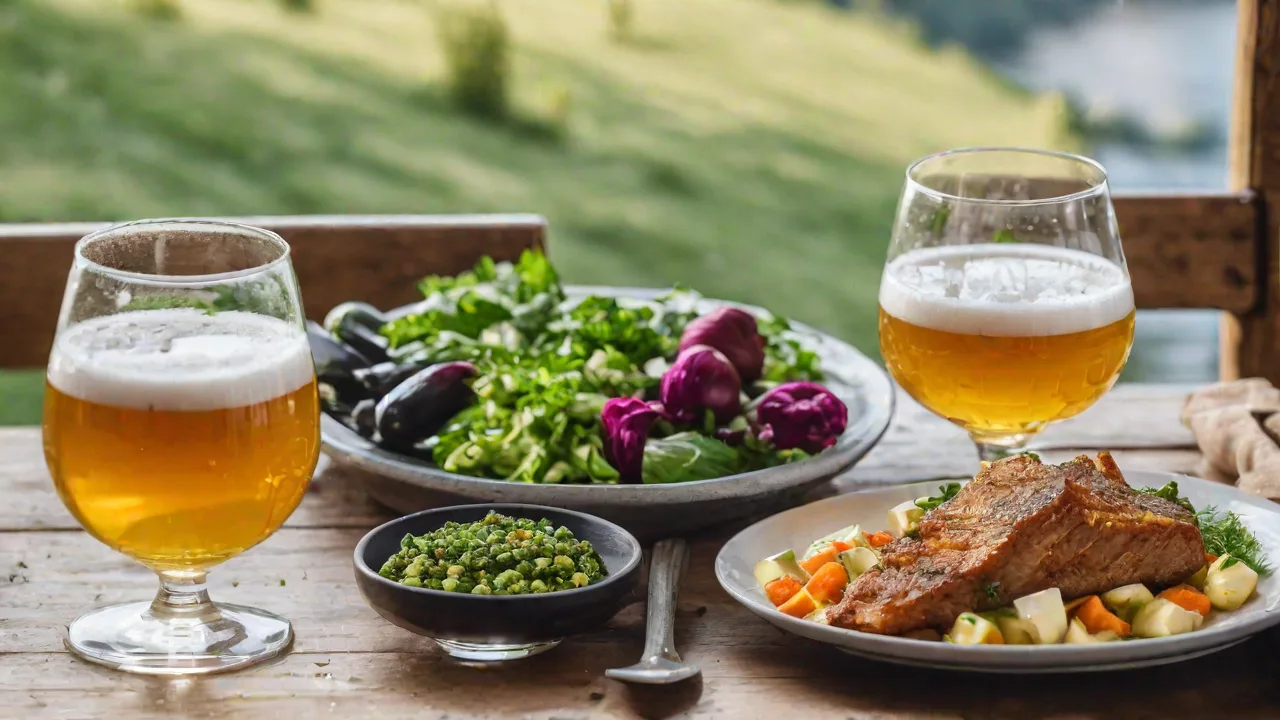
How to Pair German Beers with Regional German Vegetable Dishes
Introduction: The Botanical Heart of German Gastronomy
While global perceptions of German cuisine often revolve around pork knuckle, sausages, and heavy meat dishes, the culinary reality across Germany's diverse regions reveals a deep-seated appreciation for agricultural bounty. For centuries, regional German kitchens have celebrated the changing seasons through specialized vegetable dishes. From the prized white asparagus of Beelitz to the winter green cabbage of Oldenburg and the wild chanterelles harvested from the Black Forest, vegetables are not merely side thoughts; they are the central pillars of seasonal menus. Historically, these agricultural traditions grew hand-in-hand with regional brewing styles. Just as a specific soil and climate define the character of a local vegetable harvest, the local water chemistry, hop availability, and malting techniques shape the character of regional beers. This guide explores the sophisticated art of pairing classic German beers with regional German vegetable dishes. By understanding the chemical interactions between hop alpha acids, malt sugars, yeast esters, and the unique compounds of vegetables, we can unlock a level of culinary harmony that challenges the meat-centric stereotypes of the German table.
Understanding Germany's vegetable landscape requires looking at the geography and soil chemistry of its different states. The sandy, nutrient-poor soils of Brandenburg, for example, are perfect for white asparagus, while the marshy, cold coastal soils of Lower Saxony produce the country's best winter kale. Each of these crops has a distinct flavor profile that has been paired for centuries with local beers. German brewing culture, with its strict adherence to the Reinheitsgebot (purity law), has produced a wide range of beer styles, each with its own balance of malt sweetness, hop bitterness, and yeast complexity. When these two worlds meet, the results can be extraordinary. The crisp carbonation of a Pilsner can slice through the starch of fried potatoes, while the rich, bready malts of a Munich Dunkel can balance the intense acidity of fermented sauerkraut. By analyzing the chemistry of these pairings, we can learn how to create balanced, plant-forward menus that celebrate the best of the German soil.
The Royal Season: Spargelzeit and the Hunt for the Perfect Pale Brew
In Germany, the arrival of spring is marked by "Spargelzeit," the white asparagus season. Between mid-April and June 24th (St. John's Day), white asparagus dominates menus across the country. Unlike green asparagus, which grows above ground and develops chlorophyll, white asparagus is kept piled under mounds of soil, preventing sunlight from reaching the stalks. This labor-intensive cultivation results in a tender, ivory-white spear with a delicate flavor profile characterized by a mild sweetness, subtle earthiness, and a distinct, slightly bitter sulfur compound. Traditional preparations are simple: the asparagus is peeled, boiled with a pinch of salt, sugar, and butter, and served alongside boiled new potatoes, melted butter, or a rich Hollandaise sauce.
Pairing beer with white asparagus is notoriously difficult due to the vegetable's delicate flavors and its inherent sulfur compounds, which can react negatively with heavy hops or roasted malts, producing a metallic or unpleasantly bitter taste. To complement this spring delicacy, brewers and sommeliers look to pale, clean, and low-bitterness German lagers and ales. The ideal partners are Munich Helles, Dortmunder Export, or a classic Kölsch.
A Munich Helles, with its low hop profile and clean, sweet malt backbone, provides a gentle cushion for the asparagus. The soft water profile used in brewing Helles prevents any harsh hop bite from clashing with the vegetable's delicate bitterness, while the subtle sweetness of the malt mirrors the natural sugars of the boiled stalks. When white asparagus is served with melted butter, the clean carbonation of a Helles gently sweeps the palate, preventing the fat from coating the tongue without overpowering the main ingredient. Alternatively, a Cologne-style Kölsch offers a bright, top-fermented alternative. The subtle fruitiness of Kölsch yeast adds a layer of complexity, while its crisp, dry finish cuts through the rich egg-yolk emulsion of a classic Hollandaise sauce, cleansing the palate and preparing it for the next bite. In regions like Baden or Franconia, where local soils produce particularly aromatic asparagus, residents often favor a local Kellerbier, whose gentle yeast cloudiness matches the earthy undertones of the fresh spears, proving that regional pairings are often the most successful.
Winter Comforts: Grünkohl, Sauerkraut, and the Power of Dark Malts
As the warm months fade and autumn transitions into winter, the German agricultural calendar shifts toward hardy brassicas. In northern Germany, particularly around Bremen and Oldenburg, the first frost of winter signals the harvest of Grünkohl (green curly kale). Grünkohl is not eaten raw in salads; instead, it is slow-cooked for hours with onions, oats, and rendered animal fats, creating a deeply savory, rich, and slightly bitter stew. This culinary tradition is celebrated through "Grünkohlfahrten" (kale excursions), where groups of friends and families walk through the cold countryside, playing games and drinking schnapps, before arriving at a local tavern for a massive kale feast. Similarly, Sauerkraut (fermented white cabbage) is a winter staple across the nation, valued for its bright lactic acidity, sour crunch, and digestive properties. Sauerkraut is typically simmered with bay leaves, juniper berries, apples, and white wine.
These robust, acidic, and fatty vegetable preparations demand beers with equal weight, complexity, and structural integrity. Light lagers would be washed out by the intense flavors, while highly hopped Pilsners would clash with the acidity of the sauerkraut and the bitterness of the kale. Instead, winter vegetable dishes find their perfect matches in Munich Dunkel, Franconian Kellerbier, and the legendary Rauchbier (smoked beer) of Bamberg.
A Munich Dunkel, rich in Munich malts that undergo intensive decoction mashing, offers flavors of toasted bread crust, mild caramel, and dark cocoa. The sweetness of the Dunkel's malt body balances the intense acidity of the sauerkraut, creating a sweet-and-sour harmony on the palate. For Grünkohl, a smoked Rauchbier is the ultimate companion. The beechwood-smoke aromas of the Rauchbier merge seamlessly with the savory, slow-cooked greens. The phenolic compounds in the smoked malt mimic the wood-fired flavors of traditional cooking methods, while the firm hop bitterness and high carbonation of the beer slice through the dense, fatty textures of the stew. This pairing transforms a humble winter vegetable into an aromatic feast of smoke, earth, and malt, showing how dark, complex beers can elevate simple rustic ingredients into a gourmet experience.
The Versatile Potato: Starch, Fat, and Carbonation
The potato (Kartoffel) is perhaps the most omnipresent vegetable in German culinary history, serving as the foundation for countless regional variations. In southern Germany, Schwäbischer Kartoffelsalat (Swabian potato salad) is prepared by tossing warm sliced potatoes with hot vegetable broth, vinegar, oil, and mustard, resulting in a glossy, savory, and slightly acidic dish. In the west and north, Reibekuchen (also known as Kartoffelpuffer) are grated potato pancakes fried in oil until crispy and golden, served with sweet applesauce. These pancakes are a staple of German Christmas markets, where they are fried in giant iron skillets and eaten hot in the cold winter air. In the eastern regions, a thick Kartoffelsuppe (potato soup) cooked with root vegetables and marjoram provides comfort on cold days.
The primary challenge in pairing potato dishes is managing the starchiness and, in the case of Reibekuchen, the frying oil. Potatoes themselves have a neutral, earthy flavor that acts as a canvas for other ingredients. Therefore, the beer pairing must address both the heavy texture and the accompanying elements of fat, salt, and acid.
For crispy Reibekuchen, a sharp, highly carbonated German Pilsner is an exceptional match. The high concentration of noble hops (such as Hallertauer Mittelfrüh or Tettnanger) provides a clean, herbal bitterness that acts as a knife, cutting through the oiliness of the fried pancake. The active effervescence of the Pilsner scrubs the palate, preventing cloying oil buildup and highlighting the sweet, fresh contrast of the applesauce. When enjoying a Swabian potato salad, a rustic, unfiltered Kellerbier or Zwickelbier is the traditional choice. The gentle yeast suspension in Kellerbier mirrors the starch-thickened dressing of the salad, while its low carbonation and soft malt profile allow the bright, vinegary tang of the dressing to shine without creating a harsh metallic reaction. The earthy base of the potato soup, seasoned with dried marjoram, matches beautifully with a Munich Helles, which provides a clean, sweet malt background that lets the herbs stand out.
Gifts of the Forest: Sautéed Waldpilze and the Wheat Beer Phenols
Germany's vast forests, particularly the Black Forest (Schwarzwald) and the Bavarian Forest, are rich hunting grounds for wild mushrooms. In late summer and autumn, menus feature "Waldpilze," with a particular focus on Pfifferlinge (chanterelles) and Steinpilze (porcini). A classic southern German preparation is "Rahmschwammerl," wild mushrooms sautéed with onions and garlic, simmered in a rich herb cream sauce, and served with a large bread dumpling (Semmelknödel). The flavor profile is deeply savory (umami), earthy, woody, and creamy.
Earthy wild mushrooms and rich cream sauces require a beer that offers both high effervescence to lift the cream and complementary yeast characteristics to match the forest aromas. This role is perfectly filled by Hefeweizen (traditional Bavarian wheat beer) or a stronger Weizenbock.
Hefeweizen is brewed with a high proportion of malted wheat and fermented with specialized ale yeast strains that produce high levels of esters and phenols. These compounds manifest as aromas of ripe banana and spicy clove. When paired with sautéed chanterelles in cream sauce, the clove-like phenols of the Hefeweizen cut through the heavy cream, while the fruity banana esters complement the delicate, apricot-like aroma of the fresh chanterelles. The high carbonation of the wheat beer lifts the heavy weight of the bread dumpling, refreshing the tongue and ensuring that each bite of the rich sauce feels as light and flavorful as the first. For a rustic porcini dish, a darker Dunkelweizen offers a caramelized, bready alternative that matches the roasted notes of sautéed mushrooms. The yeasty body of the wheat beer also acts as an flavor enhancer, coating the tongue and intensifying the natural earthy umami of the wild forest mushrooms.
Autumn Harvests: Roasted Root Vegetables and the Festive Märzen
In the autumn, German farm stands are filled with root vegetables, including carrots, parsnips, turnips, and celery root (Knollensellerie). A popular regional preparation involves roasting these root crops with fresh herbs, garlic, and cold-pressed rapeseed oil until their edges are caramelized and sweet. The roasting process initiates the Maillard reaction, converting the raw vegetable starches into sweet, complex sugars and generating toasted, nutty aromas.
To pair with roasted root vegetables, a beer needs to mirror the caramelized sugars of the dish while providing enough structure to balance the earthy undertones of the roots. The ideal style for this pairing is a traditional German Märzen or an Autumn Bock.
Märzen, historically brewed in March and lagered over the summer for consumption during the autumn festivals, features a deep amber color and a rich profile of toasted Munich and Vienna malts. The caramelized, toasted bread notes of the Märzen create an immediate bridge to the roasted edges of the parsnips and carrots. The beer's clean, bottom-fermented finish ensures that the palate is refreshed, while its moderate noble hop bitterness prevents the natural sweetness of the roasted vegetables from becoming cloying. For a heartier dish featuring roasted turnips and onions, a pale Maibock or traditional Helles Bock provides a warming, higher-alcohol option. The alcohol warmth cuts through the dense starch of the turnips, while the clean, floral hop notes lift the herbal character of the roasted dish. This combination highlights the natural transition of the seasons, matching the rich warmth of the autumn harvest with the festive brewing traditions of the region.
The Chemistry of Harmony: Hops, Malts, and Vegetable Compounds
To master the pairing of German beers with vegetable dishes, one must understand the basic chemical interactions at play on the human palate. The sensory experience of a pairing is defined by three primary interactions: complementary flavors, structural contrasts, and texture cutting.
The table below summarizes the key interactions between major German beer styles and various vegetable preparations, highlighting the primary chemical and sensory mechanics:
| Beer Style | Ideal Vegetable Partner | Culinary Preparation | Primary Pairing Mechanic |
|---|---|---|---|
| Pilsner | Potato, Cauliflower | Fried (Puffer), Roasted | Hop bitterness cuts fat; carbonation cleanses starch. |
| Munich Helles | White Asparagus | Boiled with butter | Soft water & sweet malt complement delicate flavors. |
| Hefeweizen | Wild Mushrooms | Sautéed in herb cream | Clove phenols cut cream; banana esters mirror chanterelles. |
| Munich Dunkel | Sauerkraut, Red Cabbage | Slow-simmered, fermented | Toasted malt sugars balance lactic acidity. |
| Rauchbier | Green Kale (Grünkohl) | Slow-cooked with fat | Smoke phenols complement savory, fatty stew. |
| Märzen | Root Vegetables | Oven-roasted, caramelized | Maillard malts mirror roasted vegetable sugars. |
By using this structural framework, chefs and home cooks can design menus that highlight the best of both the brewhouse and the farm field. The goal is always balance: the beer should never drown out the delicate fresh notes of the vegetables, nor should the intense acidity or bitterness of a vegetable dish render the beer flat and flavorless. When planning a multi-course vegetable dinner, it is best to start with lighter, top-fermented beers like Kölsch with delicate salads, progressing to crisp Pilsners with starchier dishes, and ending with dark, rich Dunkels or Bocks to match the heavy, slow-cooked winter stews. This progression keeps the palate fresh and engaged throughout the meal.
Conclusion: Setting the Modern German Table
The pairing of German beers with regional vegetable dishes represents a natural evolution of historic culinary practices. As modern dining shifts toward sustainable, plant-forward menus, the rich diversity of German brewing styles offers an unparalleled resource for beverage pairings. By moving beyond simple meat pairings and embracing the complex flavors of seasonal harvests, we honor the historical connection between the German soil, the local farmer, and the traditional brewmaster. Whether it is a glass of crisp Pilsner with golden potato pancakes, a velvety Hefeweizen with wild forest mushrooms, or a smoky Rauchbier with winter kale, these pairings prove that the botanical heart of German gastronomy is vibrant, complex, and perfectly suited to the classic beer styles of the region. As we look to the future of dining, the integration of these regional traditions will continue to inspire new generations of chefs and brewers, keeping the rich culinary heritage of Germany alive and thriving at the modern table.