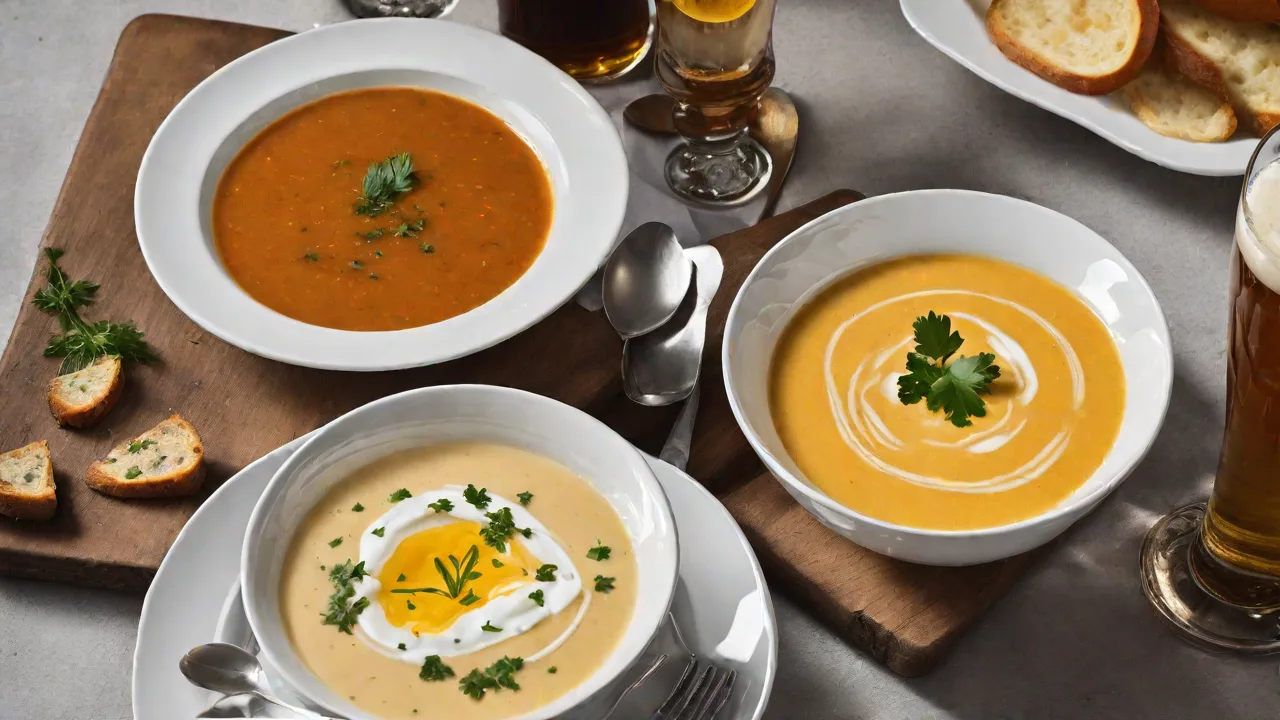
Pairing German Beers with Rich, Creamy German Soups
Introduction: The Comforting Warmth of the German Soup Kettle
In the culinary tradition of Germany, soups occupy a prestigious position, serving as comforting starters at family gatherings or as hearty, self-contained main courses during the cold winter months. German soup-making is characterized by its focus on seasonal ingredients, rich broths, and luxurious textures. Among the most popular styles are rich, creamy soups thickened with heavy cream, butter, egg yolks, and pureed starchy vegetables. From the delicate, nutmeg-scented cream of white asparagus (Spargelsuppe) in the spring to the sweet, nutty pumpkin cream soup (Kürbissuppe) in the autumn and the rustic, potato-thickened Kartoffelsuppe of winter, these soups are designed to coat the palate and warm the body. However, the velvety, high-fat texture of cream soups poses a major challenge for beverage pairings: the dairy fats coat the taste buds, dulling the tongue and making subsequent spoonfuls of soup taste heavy and flat. While wine is often overwhelmed by the starch and cream, German beers, with their active carbonation, balanced malts, and noble hops, are exceptional partners. This guide explores the art of pairing German beers with rich, creamy German soups, analyzing the flavor chemistry and regional traditions that make these pairings so satisfying.
The science of pairing beer with cream soups is centered on texture contrast and flavor bridging. Cream soups are thick, liquid emulsions of fat and starch, which coat the tongue's taste receptors. German lagers and wheat beers, with their active carbonation, act as a natural surfactant, bubbling through the dairy coating and scrubbing the tongue clean. At the same time, the malts used in brewing Helles, Märzen, and Kellerbier share caramelized flavor molecules with roasted vegetables and bacon toppings, creating a harmonious connection. By exploring these molecular interactions—such as how the clove phenols in a Hefeweizen cut through cream, or how the toasted Munich malts in a Dunkel match potato starch—we can design soup courses that are light, refreshing, and full of complex flavor.
Cream of White Asparagus Soup: Kölsch and Munich Helles
During the spring "Spargelzeit" (asparagus season), "Spargelcremesuppe" is featured on menus across Germany. The soup is prepared by simmering white asparagus peelings and woody ends in water to create an aromatic broth, which is then thickened with a roux of butter and flour, heavy cream, and finished with boiled asparagus tips, sugar, lemon juice, and a pinch of ground nutmeg. The flavor profile is delicate, sweet, slightly grassy, and velvety, with a subtle lactic acidity from the lemon juice.
Pairing beer with cream of white asparagus soup requires managing both the heavy cream texture and the delicate, sulfur-rich flavors of the vegetable. The beer must offer a clean malt profile and low hop bitterness to prevent overpowering the asparagus, combined with crisp carbonation to cut the dairy fat. The ideal partners are Cologne Kölsch or a Munich Helles.
When preparing the Spargelcremesuppe, chefs often add a tiny pinch of white sugar to the broth to balance the vegetable's natural bitterness. This subtle sweetness is mirrored by the light bready malts of the Kölsch or Helles, creating a delicate sweet-to-sweet bridge that makes the pairing feel highly deliberate and harmonious on the palate, showing how small adjustments in both the kitchen and the cellar can elevate the dining experience.
A Cologne-style Kölsch, with its light body, delicate fruitiness, and dry finish, provides a beautiful contrast to the soup. The Kölsch's crisp carbonation acts as a palate cleanser, lifting the butter and cream from the tongue without leaving a heavy malt weight that would drown out the white asparagus. The subtle fruitiness of the Kölsch yeast highlights the natural sweetness of the spears, while the dry finish cleanses the palate. A Munich Helles, with its low hop bitterness and soft, sweet malt backbone, offers a gentle alternative. The bready malt sugars of the Helles align with the flour-and-butter roux of the soup, creating a harmonious malt-to-cream connection that lets the delicate nutmeg spices shine.
German Potato Soup with Bacon: Kellerbier and Munich Dunkel
In the winter months, "Kartoffelsuppe" (potato soup) is a national comfort food. Prepared by simmering floury potatoes, carrots, celery root, leeks, and marjoram in beef broth, the soup is pureed until thick and velvety, often finished with a splash of cream and a handful of sliced, boiled Frankfurter sausages and crispy fried bacon bits. The flavor profile is deeply savory (umami), earthy, herbal (marjoram), and salty, with a thick, starch-thickened texture.
The starchy, coating texture of potato soup can easily make the meal feel heavy on the tongue. The beer pairing must manage both the dense starch and the salty, smoky bacon topping. The perfect matches are Kellerbier or Munich Dunkel.
Kellerbier, with its cloudy appearance, yeast suspension, and soft mouthfeel, matches the rustic, potato-thickened broth of the soup. The yeasty, bready malt sugars of the Kellerbier align with the starch, while its gentle carbonation and earthy hop bitterness cut the bacon fat and highlight the marjoram. If a richer, smokier pairing is preferred, a Munich Dunkel offers toasted Munich malts that mirror the caramelized bacon bits and boiled sausages. The Dunkel's copper malts provide a sweet malt cushion that tempers the saltiness of the soup, while its clean lager finish ensures each spoonful tastes fresh and light.
Cream of Pumpkin Soup: Märzen and Vienna Lager
In the autumn, "Kürbiscremesuppe" (cream of pumpkin soup) is a seasonal favorite, particularly in southern Germany. Prepared by roasting Hokkaido or butternut pumpkin with onions and garlic, the pumpkin is simmered in vegetable broth, pureed with heavy cream, and finished with a drizzle of toasted pumpkin seed oil (Kürbiskernöl) and roasted pumpkin seeds. The flavor profile is sweet, nutty, earthy, and creamy, with a thick texture and rich oil accents.
This sweet, nutty, and oily pumpkin soup requires a beer with a toasted malt profile to match the roasted pumpkin sugars, combined with moderate noble hop bitterness to cut the pumpkin seed oil. The ideal partners are a traditional German Märzen or a copper Vienna Lager.
Märzen, brewed with toasted Munich and Vienna malts, features a copper color and prominent aromas of toasted bread, mild caramel, and toasted nuts. When paired with pumpkin soup, the Märzen's caramelized malt notes create an immediate bridge to the roasted pumpkin and the nutty, toasted pumpkin seed oil. The beer's clean, bottom-fermented finish cuts the heavy cream, while its moderate noble hop bitterness prevents the natural sweetness of the roasted pumpkin from becoming cloying on the tongue, resulting in a balanced, warm autumn pairing.
Pancake Strip Soup in Clear Broth: German Pilsner and Helles
While not a cream soup, "Flädlesuppe" (Pancake Strip Soup, also known as Frittatensuppe in Bavaria) is a historic regional starter. It consists of a hot, crystal-clear beef broth (Consommé) loaded with thin strips of savory German pancakes (Pfannkuchen) and garnished with fresh chives. The flavor profile is savory, salty, and herbal, with a light liquid texture and chewy pancake strips.
This clear, salty beef broth requires a light, dry, and clean beer that will not compete with the delicate beef broth, combined with firm carbonation to cut the pancake starch. The best styles are a dry German Pilsner or a Munich Helles.
A German Pilsner features a dry body, high carbonation, and an assertive noble hop bitterness. When paired with Flädlesuppe, the Pilsner's hop bitterness acts as a sharp contrast to the salty beef broth, while its grassy, herbal noble hop aromas highlight the fresh chives. The high carbonation cleanses the tongue of the pancake starch, keeping the palate refreshed and ready for the main course, showing how a clean, dry lager can elevate a simple, classic starter soup.
The Impact of Soup Toppings on Beer Selection
When pairing beer with creamy soups, the choice of toppings is just as important as the soup base itself. A simple cream of potato soup can be completely transformed by adding different garnishes. If the soup is topped with crispy fried bacon bits and sliced Frankfurter sausages, this introduces salt, fat, and smoke elements that require a toasted Munich Dunkel or a Märzen to match the caramelized meat flavors and cut the fat. However, if the same potato soup is garnished with fresh green chives and wild herbs, it takes on an herbaceous, fresh character that finds a better partner in the grassy noble hops of a German Pilsner. Similarly, cream of pumpkin soup drizzled with roasted pumpkin seed oil has a nutty, rich finish that requires the toasted Vienna malts of a Märzen. If you top the pumpkin soup with a dollop of sour cream or ginger reduction, it introduces acidity and spice that demand a yeasty, soft Hefeweizen. By adjusting your beer selection to match the specific toppings, you can ensure that the beverage supports all the flavor elements of the soup.
The Chemistry of Nutmeg and Spices in Soup Pairings
Many traditional German cream soups are seasoned with ground nutmeg, white pepper, and mace, which add a subtle, warming spice undertone to the rich dairy base. Nutmeg contains volatile organic compounds like myristicin and elemicin, which have a warm, woody, and slightly sweet aroma. These spice compounds can easily clash with highly bitter hops or roasted, acidic malts. To complement nutmeg-scented soups like Spargelcremesuppe, the beer must offer a gentle, yeast-driven phenolic profile. The clove-like phenols present in a Bavarian Hefeweizen or a Cologne Kölsch yeast align beautifully with the warm spices, creating a subtle harmony on the tongue. The beer's soft malt body cushions the spice heat, while its carbonation lifts the heavy cream fat, letting the delicate asparagus and nutmeg flavors stand out. Understanding these chemical interactions between spices, yeast phenols, and dairy fats allows chefs to create sophisticated, well-balanced tasting courses.
The Physics of Viscosity and Palate Cleansing
The success of pairing German beers with creamy soups is rooted in organic physics. Cream soups have high viscosity due to the emulsification of fats (butter, cream) and starches (potatoes, pumpkin). This viscous liquid coats the taste buds, forming a barrier that blocks flavor detection. The active carbonation in German beers acts as a physical scrubber, releasing millions of micro-bubbles that break this viscous barrier, cleansing the tongue and resetting the taste buds.
In addition to carbonation, the serving temperature of the beer plays a vital role in managing soup viscosity. When hot soup is followed by a cold drink, the sudden temperature drop on the tongue causes the dairy fats in the mouth to solidify slightly, creating a heavy, wax-like coating. To prevent this, the beer should not be served ice-cold. A serving temperature of 6°C to 10°C (43°F to 50°F) is ideal for pairing with warm soups. This moderate temperature cools the mouth comfortably without causing the fats to congeal, allowing the carbonation and malt sugars to work efficiently to lift the cream and potato starch from the palate.
The table below provides a quick-reference guide to matching specific German soups with their ideal beer partners, highlighting the key sensory and physical interactions of the pairing:
| Soup Type | Primary Ingredients & Herbs | Ideal Beer Style | Primary Pairing Mechanic |
|---|---|---|---|
| Spargelcremesuppe | White asparagus, cream, butter, nutmeg | Cologne Kölsch / Munich Helles | Dry finish cuts cream; light malts let asparagus shine. |
| Kartoffelsuppe | Potatoes, cream, marjoram, bacon | Kellerbier / Munich Dunkel | Yeast suspension matches potato starch; malts mirror bacon. |
| Kürbiscremesuppe | Roasted pumpkin, cream, pumpkin seed oil | Märzen / Vienna Lager | Toasted malts mirror roasted pumpkin and nutty oil. |
| Flädlesuppe | Clear beef broth, pancake strips, chives | German Pilsner | Hop bitterness contrasts salty broth; hops highlight chives. |
| Biersuppe | Munich beer, cream, egg yolks, croutons | Munich Dunkel / Doppelbock | Matches the beer base; sweet malts balance egg yolk fat. |
By using this scientific approach, restaurants and home cooks can design soup courses that are light, refreshing, and full of complex flavor. The carbonation in the beer acts as a physical scrubber, the hop bitterness provides structural contrast, and the malt sweetness balances the salt and spices of the soup.
Conclusion: Raising a Glass to Soup-Pot Comfort
The pairing of traditional German soups with classic regional beers is a testament to the enduring wisdom of traditional country kitchens. Each pairing is designed to solve a specific culinary challenge: Kölsch cuts cream, Kellerbier matches potato starch, Märzen mirrors roasted pumpkin sugars, and Pilsner highlights herbal broths. By understanding these interactions, we can appreciate the technical skill involved in both simmering the perfect pot of soup and brewing the perfect pint of lager. Whether sitting in a rustic Bavarian tavern or cooking at home on a cold winter night, raising a glass of fresh German beer alongside a hot bowl of creamy soup is the ultimate way to experience the comforting, heart-warming flavors of the German table. Prost!