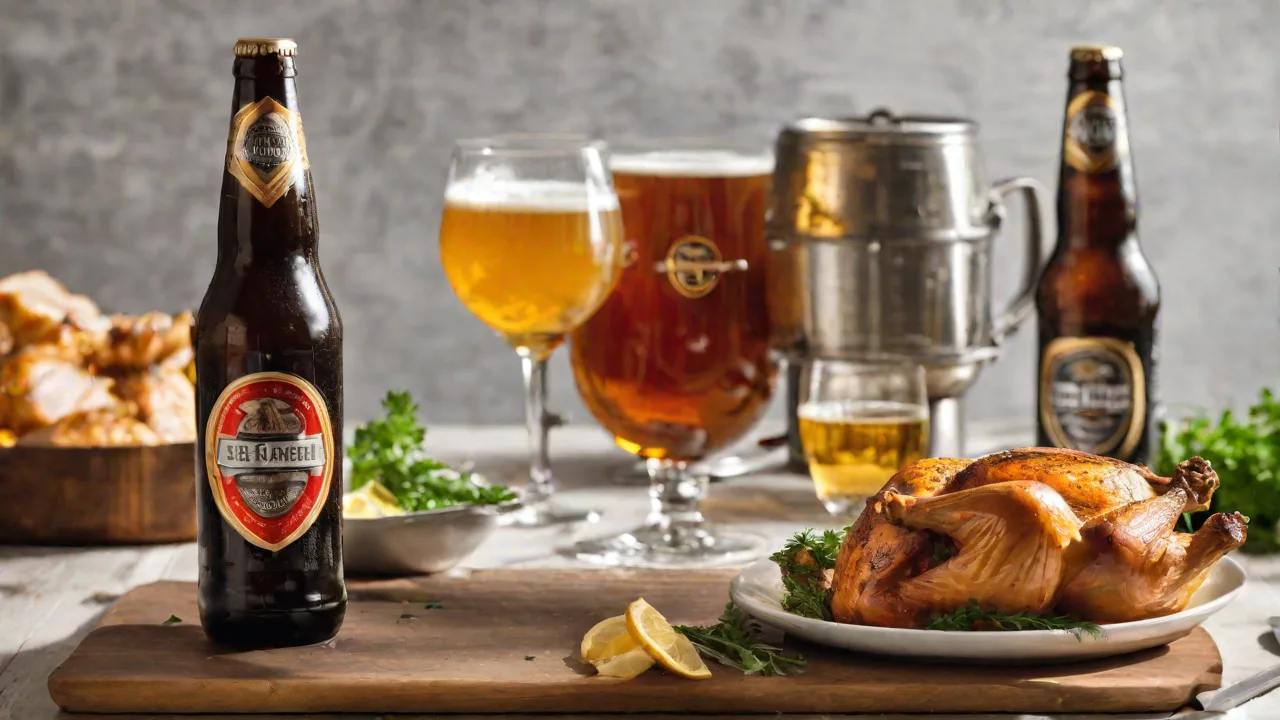
The Best German Beers to Complement German-style Roast Chicken
Introduction: The Hearth-Roasted Jewel of the Beer Garden
In the hierarchy of German comfort food, the spit-roasted chicken—known as "Brathähnchen" across Germany and affectionately termed "Hendl" or "Wiesnhendl" in Bavaria—occupies a legendary status. Most famous for its role at the Munich Oktoberfest, where millions of half-chickens are consumed annually, the Brathähnchen is a sensory feast. A perfect German-style roast chicken features paper-thin, crispy skin that has been seasoned with salt, sweet paprika, and butter, enclosing juicy, tender meat. Traditional preparation requires roasting the bird on a rotating spit over high heat, allowing the rendering fat to baste the skin continuously. This cooking method creates a complex array of flavors: salty, savory fat, caramelized skin sugars, and the natural umami of the poultry. To accompany such a rich, fat-laden, and salty dish, the beverage selection must be precise. In German beer gardens, this role has always been filled by local brews. The natural carbonation, hop bitterness, and balanced malt profiles of traditional German beers are uniquely suited to clean the palate after each rich bite of chicken. This guide explores the best German beer pairings for German-style roast chicken, examining the structural chemistry of hops, carbonation, and malt as they interact with crispy skin, savory fats, and regional seasonings.
The rise of the spit-roasted chicken in German dining culture is closely linked to the expansion of regional restaurants in the mid-20th century, such as the famous "Wienerwald" chain founded by Friedrich Jahn. Wienerwald popularized rotisserie chicken across Central Europe, transforming it from a rare festival luxury into an accessible, everyday comfort food. This expansion coincided with the golden age of German beer gardens, where large rotisserie spits were installed directly alongside the beer taps, allowing patrons to enjoy hot, crispy chicken alongside their fresh pints. The sensory appeal of eating hot chicken with a cold, carbonated lager is timeless, combining the warmth of the hearth with the refreshing qualities of the cellar. By examining how different seasoning styles (such as garlic-herb rubs, caramelized paprika glazes, and simple butter bastes) interact with regional beer varieties, we can appreciate the culinary harmony of this classic pairing.
The Festival Standard: Wiesnhendl and the Golden Oktoberfestbier
The Wiesnhendl is the undisputed culinary king of the Munich beer tents. Its preparation is characterized by simplicity and focus: the chicken is cavity-stuffed with fresh curly parsley, butter, and onions, heavily rubbed with salt and sweet Hungarian paprika, and roasted until the skin is mahogany-brown and shatteringly crisp. It is served hot and fresh, traditionally without gravy, accompanied only by a soft pretzel (Brezn) or a cold potato salad. The saltiness of the skin is intense, designed to satisfy hungry festival-goers and balance the large volumes of beer consumed during the event.
The challenge of pairing beer with a Wiesnhendl is managing the high salt concentration on the skin and the rich coating of rendered butter and chicken fat. The beer must offer high drinkability, balanced malt sweetness to counter the salt, and a clean finish to reset the palate. The classic, time-tested match is a Munich Oktoberfestbier (also known as Wiesn Helles).
Modern Oktoberfestbier is a golden, medium-bodied lager that is slightly stronger and maltier than a standard Helles (typically 6.0% to 6.3% ABV). Brewed with Pilsner and Munich malts, it offers a gentle, sweet malt profile with a subtle toasted character. When paired with the Wiesnhendl, the beer's malty sweetness acts as a direct counterweight to the heavy salt rub of the skin, softening the saltiness and making the chicken taste juicier. The clean carbonation of the lager sweeps the tongue, lifting the rendered chicken fat and preparing the mouth for the next bite of crispy skin. The low-to-moderate noble hop bitterness provides a clean, dry finish, ensuring that the pairing remains incredibly refreshing even after consuming a full half-chicken, making it the perfect companion for the festive atmosphere of the Munich beer halls.
Green and Herbaceous: Garlic-Herb Roast Chicken and the German Pilsner
Outside the festival grounds, home cooks and regional taverns often prepare Knoblauch-Kräuter Hendl (garlic-herb roast chicken). This variation is rubbed with a dense paste of minced garlic, cold-pressed oil, and fresh garden herbs, including marjoram, thyme, rosemary, and flat-leaf parsley. The chicken is roasted over a bed of onions and root vegetables. The resulting flavor profile is intensely aromatic, savory, and herbaceous, with a sharp garlic bite and a green, earthy undertone.
Earthy herbs and pungent garlic demand a beer style that offers bright, complementary herbal aromas and a firm, cleansing bitterness. The perfect partner for this herb-rubbed chicken is a classic German Pilsner or an unfiltered Kellerbier.
A German Pilsner (particularly northern German styles) features a pale gold color, a dry body, and an assertive noble hop profile. Brewed with hops like Hallertauer Mittelfrüh, Tettnanger, or Spalter Select, the Pilsner offers aromas of fresh cut grass, spicy pine, and wildflowers. These hop aromas align beautifully with the marjoram and thyme rub of the chicken, amplifying the herbal complexity of the dish. The firm, clean bitterness of the Pilsner cuts directly through the garlic oils and the fatty chicken skin, cleansing the tongue and highlighting the savory flavors of the meat. Alternatively, an unfiltered Kellerbier provides a softer, yeast-rich mouthfeel that complements the roasted onions and vegetables cooked beneath the chicken, while its rustic hop profile maintains the necessary palate-cleansing bitterness, resulting in a balanced, rustic dining experience.
Caramelized Crusts: Spiced Paprika Chicken and the Copper Altbier
Another popular preparation is the heavily spiced paprika chicken, often basted with a mixture of sweet paprika, hot paprika, onion powder, and oil. During the roasting process, the paprika caramelizes, creating a sweet, smoky, and slightly spicy crust with a dark orange hue. The flavor profile is characterized by a mild spice heat, sweet bell pepper notes, and a deep, roasted skin character. This preparation is common in western Germany, where it is often served with a side of French fries or a crisp green salad.
To pair with a spiced paprika chicken, a beer needs a toasted malt character to match the caramelized skin, combined with a firm bitterness to balance the mild heat of the paprika. The ideal style for this pairing is a Düsseldorf-style Altbier or a Vienna Lager.
Altbier is a copper-colored, top-fermented ale that is lagered at cold temperatures, combining the complex fruitiness of an ale with the clean finish of a lager. Brewed with carafa and Munich malts, Altbier features a toasted, nutty malt profile with a firm, clean hop bitterness. When paired with paprika-rubbed chicken, the toasted malt notes of the Altbier create a bridge to the caramelized spices on the skin. The beer's clean, firm bitterness cuts through the basting oil, while its dry, lagered finish prevents the sweet paprika flavors from building up on the palate, ensuring each bite feels light. This pairing is a balance of copper malts and caramelized spices, where neither element dominates the other, creating a clean finish on the tongue.
The Physics of Fat and Bubbles: Why Carbonation and Hops Matter
The chemistry of pairing German beers with roast chicken is rooted in the physical properties of carbonation, hop alpha acids, and the human sensory apparatus. Roast chicken skin contains high levels of monounsaturated and saturated fats, which coat the taste buds, creating a barrier that prevents the tongue from tasting subtle flavors. The active carbonation in beer acts as a natural surfactant, scrubbing this fatty coating off the tongue. At the same time, the isomerized alpha acids from the hops (humulones) bind to the fat molecules, breaking their emulsion and cleansing the palate. This physical reaction is what makes a carbonated, bitter lager so refreshing when eaten with fried or roasted meats, resetting the taste buds for the next savory bite.
The table below outlines the structural interactions between specific German roast chicken preparations and their ideal beer styles, highlighting the sensory mechanics of each pairing:
| Chicken Style | Seasoning & Prep | Ideal Beer Style | Primary Sensory Mechanic |
|---|---|---|---|
| Wiesnhendl | Parsley, butter, heavy salt, paprika | Oktoberfestbier / Märzen | Malt sweetness tempers salt; carbonation lifts butter. |
| Garlic-Herb Chicken | Garlic, marjoram, thyme, rosemary | German Pilsner | Noble hop alpha acids cut garlic oils; herbal hops match herbs. |
| Spiced Paprika Chicken | Sweet & hot paprika rub, oil basting | Altbier / Vienna Lager | Toasted malts mirror caramelized paprika sugars. |
| Beer-Can Chicken | Dunkel or Hefeweizen infused | Munich Dunkel | Roasted malts align with the beer-infused interior meat. |
| Leftover Chicken Salad | Mayonnaise, celery, cold chicken | Kölsch | Crisp, dry finish cuts heavy mayonnaise dressing. |
By using this systematic approach, diners can ensure that every bite of roast chicken feels as flavorful and satisfying as the first. The carbonation in the beer acts as a physical scrubber, the hop bitterness provides structural contrast, and the malt sweetness balances the salt and caramelized sugars of the skin. Side dishes also play a key role: a side of spätzle with gravy is supported by a rich Dunkel, while a fresh, acidic cucumber salad finds its match in a clean, crisp Helles, ensuring the entire meal is harmonized.
The Role of Glassware and Temperature in Roast Chicken Pairings
To experience these pairings at their best, you must pay attention to serving temperature and glassware, as they directly influence how the beer interacts with chicken fat and skin. A crisp German Pilsner should be served cold, at 4°C to 6°C (39°F to 43°F), in a tall, tapered Pilsner flute. The narrow base of the flute concentrates the carbonation, ensuring a steady stream of bubbles that continuously scrubs grease from the palate, while the flared rim releases the herbal hop aromas. For a classic Wiesnhendl, an Oktoberfestbier is traditionally served in a large one-liter glass mug known as a Maß. The thick glass of the Maß keeps the beer cold during long outdoor festival sessions, while its wide opening allows you to take deep gulps that wash down the heavily salted chicken skin. Darker styles like Munich Dunkel and Altbier benefit from a slightly warmer serving temperature of 8°C to 10°C (46°F to 50°F), served in a Willibecher or an Altbier stange. This warmer temperature allows the caramelized Munich and Carafa malts to open up, releasing sweet, bready aromas that complement the wood-smoked skin of beer-can chicken or caramelized paprika glazes. Drinking a warm or flat beer alongside roast chicken is a mistake, as the flat beverage cannot break down the dense animal fats, leaving a heavy, greasy sensation on the tongue.
Historical Evolution of the German Beer Garden Feast
The tradition of pairing roast chicken and beer has deep roots in the history of German beer gardens, particularly in Bavaria during the 19th century. Originally, beer gardens emerged because Munich brewers stored their lager barrels in deep cellars along the Isar River to keep them cool during the summer. To shade the cellars, they planted chestnut trees and covered the ground with gravel. Eventually, they began serving beer directly on-site. Because early regulations prohibited the brewers from selling hot food to protect local taverns, patrons were allowed to bring their own picnic baskets. Many brought simple cold meats, cheeses, and radishes. When these food restrictions were lifted, brewers quickly installed open-fire rotisseries to spit-roast whole chickens, as the savory grease and heavy salt of the chicken made patrons thirsty for cold, refreshing lager. This symbiotic relationship between the hot rotisserie spit and the cold lager tap became the foundation of modern German beer garden culture. Today, whether in Munich, Berlin, or Düsseldorf, the sight of golden, rotating chickens next to a line of polished beer taps remains the ultimate symbol of community, hospitality, and culinary harmony.
Conclusion: The Ultimate Tavern Celebration
The pairing of German-style roast chicken with traditional German lagers and ales represents the pinnacle of rustic culinary satisfaction. From the crowded tents of the Munich Oktoberfest to the quiet shade of a neighborhood beer garden, this combination has brought comfort to diners for generations. By choosing beer styles that address the specific salt, fat, herb, and spice profiles of the chicken, we honor the culinary wisdom of the past while enjoying a meal that is balanced, refreshing, and deeply satisfying. Whether pouring a golden Oktoberfestbier alongside a crispy Wiesnhendl or a sharp Pilsner with a garlic-herb roast, you are raising a glass to the timeless harmony of the German hearth. Guten Appetit!